September 4th, 2026 • 52:52
Transcript Note: I have taken the liberty to edit this transcript for clarity and readability purposes. I trust you will find the substance and meaning preserved.
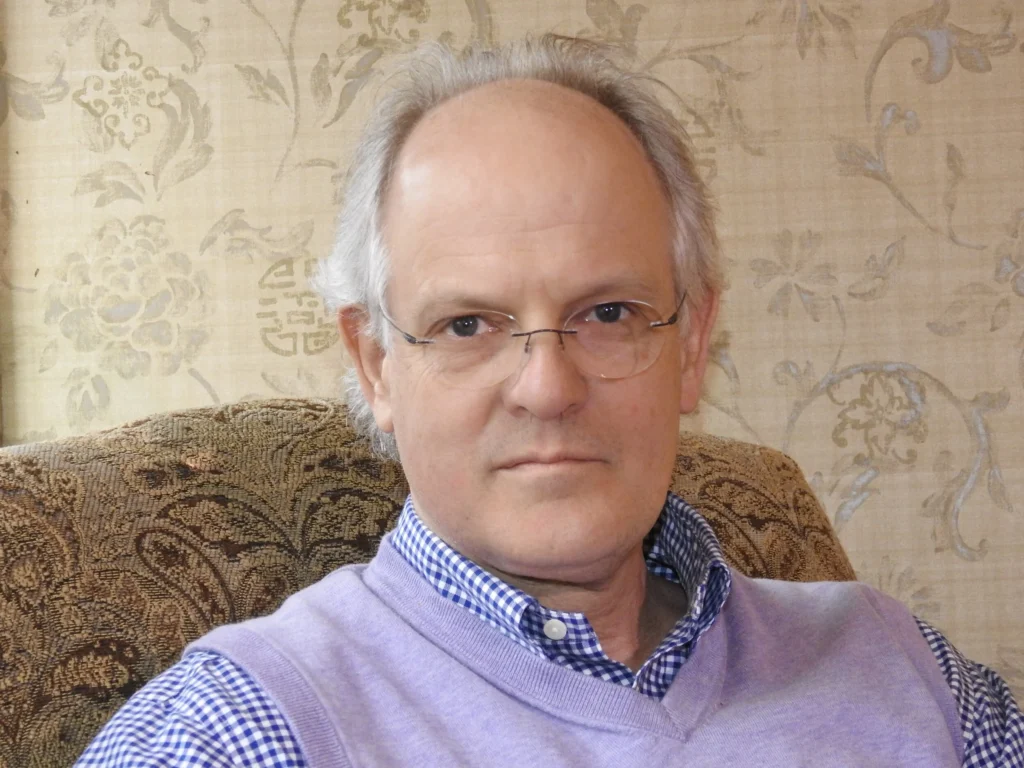
An Interview with Roger Brooke by Daniel T. Bourne
What Is Phenomenology?
Daniel T. Bourne
Roger Brooke, thank you for joining me.
Roger Brooke
Hi, nice to be here.
Daniel T. Bourne
Could you start off by just explaining what is phenomenology?
Roger Brooke
The term is really interesting. It was founded, or kind of first used, really around about 1900 by Husserl. And it’s had various iterations and movements since then, from Heidegger, Merleau-Ponty, and so many other scholars. Many of them have used the word phenomenology in slightly different ways.
So asking me to say what is phenomenology is a little bit like asking what is psychoanalysis. It certainly can’t be limited to Husserl’s understanding of phenomenology any more than psychoanalysis is limited to Freud.
So, as I sometimes say in lectures, I feel like I’m old and grumpy enough to speak for myself because I’ve been steeped in this now for 50 years.
I kind of have my own take on phenomenology. For me, it’s a method and it’s an approach, first of all, a general orientation and approach. But it’s also something of a systematic method for studying phenomena on their own terms as they occur to us.
Now, “on their own terms” doesn’t mean sort of objectively, as though that’s separate from any kind of perspective, because one of the fundamental insights of phenomenology, going back to Husserl, is that phenomena always appear to us from a certain perspective. And the perspective (or, as Husserl would call it, the consciousness) the perspective that allows a phenomenon to appear has some kind of constitutive authority over it.
To take a very, very simple example, I did my master’s thesis back in 1980 and ’81 on the phenomenology of guilt.
So, to take the phenomenon of guilt, for example: guilt is a phenomenon, but it is going to appear differently whether you are, say, a policeman or a Catholic priest or a psychotherapist.
The kind of guilt that comes through my door… if the person went to a policeman and the policeman said, “No, you’re not guilty. Don’t come here. That’s not guilt”, you know, but if the person went to the Catholic priest, guilt comes out of a theological kind of constituting or organizing perspective.
As a clinical psychologist, and especially as a psychoanalytically oriented depth psychotherapist, that also means that the phenomenon of guilt is going to become a phenomenon from my perspective as a depth psychotherapist.
And each of those organizing perspectives is perfectly legitimate and will open up something, but it will also be limited. And that’s fine.
So one of the first insights of phenomenology is that we’re interested in studying phenomena as they occur to us, but it is always going to be from a particular perspective.
Primarily, it involves trying to set aside one’s most obvious assumptions.
So, for example, taking the example of guilt: guilt is a feeling. Okay, we all know what guilt is – it’s a feeling.
Well, wait a minute, wait a minute. People who suffer from guilt also are not cognitively dead. I mean, the feelings have thoughts in them, you know, and it’s also a way of behaving.
Guilty people, even if they’re not legally guilty, guilty people try to hide. They pretend things are fine when they’re not. So there’s a kind of a slippage in the quality of one’s presence in the world.
So let’s put aside the idea that it’s a feeling, or it’s a set of cognitive processes or something. It’s much more than that. It’s a whole way of being in the world.
If we can set aside those theoretical prejudices, we will discover that guilt is a whole mode, or way, of being in the world which has cognitive processes, has feelings, has certain styles of behaving, and therefore even has its physiology and everything else.
And the world appears in certain ways. When somebody looks at you, you wonder if they know whether or not, you know, do they know what you’ve done? And the fear is that they might.
So other people appear in the world of a guilty person in ways that don’t appear to a non-guilty person.
So it is a whole mode of being in the world. That would be an example of both setting aside one’s prejudices, but also then opening up the various kinds of occasions and examples of guilt.
Guilt for having stolen something, guilt for no longer being a Christian, guilt for not having written to my parents for a few weeks… all these different kinds of guilt can vary in all sorts of ways.
But we will find that there’s a certain common structure. Or, the word “essence” is not a good one because it’s got too much philosophical baggage, but there is a sort of a common structure to the idea of guilt.
In psychotherapy, a phenomenological approach, I would say, is that we really want to listen much more than we speak.
Whenever, as therapists, we ask a question, we are setting an agenda. In fact, we’re inserting our agenda, our needs and desires, instead of waiting for the patient.
Now, obviously, in those first sessions, if you just sit there like a cartoon, the patient’s never going to come back. I mean, you have to open things up and start a conversation going and so on.
But the more therapy goes on, the less you actually need to speak as a therapist and to open things up.
I usually just sort of say, “Hi, welcome back.” And then I sit down and I might make a gesture which is, “Over to you.”
So in psychotherapy, I would say a phenomenological approach, what would be common to phenomenologists, is that we try to set aside quite a lot of our assumptions regarding this patient.
We try to set aside diagnostic categories. This is in session after session. I try to set aside a lot of what I know about the person.
I think Wilfred Bion had a perfect phenomenological moment when he famously said you try to approach each session without memory and without desire.
In other words, all that is, as the phenomenologists would say, is bracketed out and withheld so that you can approach the session with a kind of absolute clarity.
I also think that that’s actually… I mean, that might be fine in five-days-a-week analysis. In the kind of once- or twice-a-week psychotherapy we do with 20 patients, it’s just not helpful.
We have to remember who the hell we’re talking to. And actually, we should really remember what happened in the last session because very often the beginning of this session is a commentary, even a supervisory, unconsciously supervisory, commentary on the previous session.
So, I like to be attuned with a sense of continuity while also recognizing that I mustn’t hold to that in a fixed way, because a different phenomenon might need to appear this week, might be calling for our attention.
I do use theory, but I hold theory very lightly.
If I can add to something about that, I would say that I tend to think of theory as opening up lines for the empathic imagination.
So, for me for example… Freud and Melanie Klein, talking about envy, has theories of envy where it’s penis envy for Freud and breast envy for Melanie Klein.
And I think if we simply stop theory and listen anew, I think we’ll miss an awful lot.
I don’t think Freud and Klein on envy are useful as sort of theories which are sets of ideas which explain a phenomenon. But I think that they do open up lines in which we can imagine guilt, no sorry, envy – the phenomenon of envy – appearing in quite different ways.
And so that means that people like Klein or Freud and Jung, for that matter, allow us to hear and become sensitive to phenomena that otherwise would just remain obscure.
I mean, I’m just not that brilliant that I could have worked out Freud’s or Klein’s insights into envy on my own. I probably could have worked for my 45 years as a psychotherapist and never got it, but they helped me hear it many times in the lives of my patients.
So I don’t think theory, that is to say, I’m one of those phenomenologists who is a hermeneutical phenomenologist, meaning I’m not afraid to use interpretation or to make use of theory, as long as I hold that theory very lightly.
And not in terms of a correspondence theory of truth, like there’s an empirical state of affairs which is now explained, but rather hold that theory lightly as a way of helping me imagine the movements of envy in my patients’ lives.
The other thing I want to say about phenomenology is, if many of your listeners might look up phenomenology on the web or something, it’ll say it’s like “the study of how phenomena appear to consciousness.”
And in Heidegger’s later writings, after Being and Time, he talks about the being of beings appearing, or beings appearing in their own being, and that we should sort of… let’s see how they’re just appearing to us.
I think that something is lost after Heidegger’s Being and Time.
Because what we mean by appearing to consciousness is just not taken for granted. For the phenomenologists, consciousness is an overall kind of awareness, even that kind of awareness where we don’t know what it is we’re aware of, but we’re aware of something.
Or our behavior shows that we’re aware of something.
But what it is is just not obvious at all to consciousness (in the way we usually think of as consciousness).
In the introduction to Being and Time, Heidegger describes phenomena as that which appears, and he says how it appears is, for the most part, not given, or it appears as concealed, or concealment.
So he describes how dissemblance and concealment is at the very heart, or the very being, if you like, of phenomena themselves.
In fact, he then says, if phenomena were not for the most part concealed, there wouldn’t be any need for phenomenology.
I mean, phenomenology is precisely called for because the phenomena are just not self-evident, even though he’ll use the language of self-evident, meaning it comes from itself.
It’s not going to appear because of a certain scientific experiment or because you put it under a microscope or something. It’s self-revealing in that way.
But what is self-revealing might be very obscure.
And I’ve got a lovely little story. I know I’m going on and on, but I have a lovely little story describing my early contact with phenomenology in practice.
This would have been about 1983 with Professor Dreyer Kruger.
Dreyer Kruger was a scholar, an Africana in South Africa at Rhodes University. But he came out of… he was steeped in the Dutch tradition of phenomenology and in German phenomenology. He read German as well as Dutch.
And he was also an analysand of the great Daseinsanalyst Medard Boss, and was a student of Boss. And I was in supervision in a small supervision group with Dreyer Kruger from about 1982 for the next six years or so.
Anyway, in one of those early supervision groups, a chap presented a case, and after a while Dreyer said, “Okay, that’s enough. I’ve heard enough. What is the thing that is most – what is most present in the room? What is the phenomenon most present in the room?”
And the therapist sort of tried various things and said, “Well, it’s the two of us.”
And Dreyer just, in a friendly way… he was quite flamboyant and he waved his hand and said, “No, no, no, no. Just what’s most present?”
And then intrepid, precocious young students like myself tried transference interpretations or something, and he kind of dismissed them all.
Then he says… So then we all gave up, and he said, “It’s his father, of course.”
And the student presenting the case said, “But, Prof, he’s never mentioned his father.”
And Dreyer said, “Precisely. His father is this presence that must never be named, but it must be named if this young man is ever to be free.”
Isn’t that a cool story?
I think he was going through… I think Prof was going through a Lacan phase or something at the time. But anyway, that gave me – it was a beautiful example, which I’ve always remembered, of how the phenomena that call for attention might be the elephant in the room.
The thing that must not be said, or that we’re all walking around and trying to pretend isn’t there.
But that is the phenomenon that is most present and most needs to be talked about.
So that’s what I would say about phenomenology. I’m happy if you want to go. The next question might be about Jung’s relationship to phenomenology, if you’re interested.
Jung’s Relationship to Phenomenology
Daniel T. Bourne
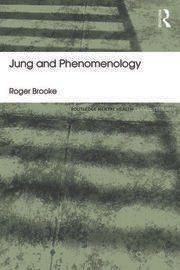
Yeah, actually, in your book Jung and Phenomenology, you wrote that
“Understanding Jung as a phenomenologist is central to understanding Jung.”
So I would be more than happy, yeah.
Roger Brooke
Yes, yes, I do think so. Thank you. Yeah, thanks. That’s a nice way of setting it up.
Jung called himself a phenomenologist in a number of places.
His phenomenological approach is usually mentioned as a contrast to Freud. So in Freud’s Introductory Lectures, which came out in 1915, Freud says that ‘in our method’ (meaning the psychoanalytic method) ‘perceived phenomena are secondary to hypothetical drives,’1“We seek not merely to describe and to classify phenomena, but to understand them as signs of an interplay of forces in the mind, as a manifestation of purposeful intentions working concurrently or in mutual opposition. We are concerned with a dynamic view [Auffassung] of mental phenomena. On our view the phenomena that are perceived must yield in importance to trends which are only hypothetical.” or drives that are purely hypothetical and assumed.
The phenomenological critique of Freud goes right at the heart of that. There’s no basis for such an assumption.
Perceived phenomena certainly have depth and history and resonance and so on. And they’re embodied. I mean, that might all be true.
But we don’t want to just say that it’s a kind of an epiphenomenon or a secondary phenomenon to the real thing, which is these sort of assumed drives.
Jung’s example of phenomenology, or the development of his phenomenological position, is sometimes kind of clearly in his Yale lectures, Psychology and Religion, where he describes the image of the Virgin Mary.
And he says to understand the meaning of the Virgin Mary as an image, we have to do so in a way that honors the image of the Virgin Mary in the Christian tradition.
We don’t… it’s completely wrong to sort of, how to say, “Well, she’s a mother,” you know, start with a whole theoretical, say an Oedipal theory as in Freud, and then you’d say, “Well, okay, so Mary’s the mother, but because of our incest anxieties, we don’t want to imagine she’s a sexual person, so we’ll make her a virgin so we don’t have a sort of a trauma of our own sexualized incest fantasies,” you know, and then, and then, et cetera, et cetera.
And we basically, in that way, in that kind of Freudian reductionism, completely destroy the meaning of the image of the Virgin Mary in the Judeo-Christian tradition.
Freudian hermeneutics is relentlessly a hermeneutics of suspicion, as Paul Ricœur would call it. Whereas Jung’s is much more of a hermeneutics of faith. Again, that’s Ricœur ’s term.
A hermeneutics of faith in that he wants to interpret and understand more deeply this image of the Virgin Mary, but he’ll do so in a way that draws her out within the writings and images of the Christian tradition, rather than playing sort of smarty-pants and pretending that we know better.
I’d also say that Jung’s phenomenology is really inconsistent.
He was not a good thinker. He was a great scholar, but his scholarship was not very clear thinking. I mean, he had nothing of the clarity of Freud, whose thinking is extraordinarily systematic and clear.
And one of the difficulties that Jungian psychology has had is that his thinking is sort of all over the place. He was extraordinarily insightful and intuitive.
But as a thinker he was not, for the most part, very strong.
It’s funny, he calls himself a thinking type. I don’t think he was a thinking type. I think he was an intuitive type. [That] is my take on it.
Anyway, one of the big problems from a phenomenological point of view is his notion of the psyche, which is too much… it’s used as a synonym for mind.
And mind, in that philosophical history, is Cartesian mind.
So the psyche for Jung is what goes on between the ears and behind the eyeballs. There are many passages where Jung says, it’s my mind with its images that makes up the psyche, and ultimately what the world is we have no idea.
All we have is a sort of web, a complex web of mental images.
I mean, that’s hopeless. And it’s not really what Jung means by the psyche anyway.
The psyche is not the same as mind.
By the way, if I have had, I think, one real contribution to the field over the decades, it has been to separate psyche and mind in Jung’s thought and say that they’re often used interchangeably, but they’re not the same.
At the beginning of The Secret of the Golden Flower, Jung makes a comment about some people, you know, there are probably some fish in the sea that think that the sea is inside them. But we all know that the fish is inside the sea.
And in the same way, human beings are obviously inside the psyche. The psyche is not inside us.
Well, that’s completely incompatible with the notion of mind as sort of going on as a set of mental events in the head.
So one of the things that I did in Jung and Phenomenology was I spent a lot of time on separating out psyche and mind and showing that what Jungians call the psyche is really the psychological world in which we live and dwell and mate and die and live our lives.
And what Jungians, therefore, and Jung calls the psyche, is really what the phenomenologists, especially the Heideggerian phenomenologists, call world.
It’s the psychological world in which we live.
The other thing I’d say about Jung and phenomenology… I kind of, let me say, I follow that thread, teasing apart what Jung kind of said because of the philosophical limitations of his perspective, but what he’s getting at.
And what he’s getting at, he continually shows in these little insights that he drops all over his works, like, you know, that the sea is not inside the fish, the fish is inside the sea.
I take a lot of these little insights from all over his work and show that this is really what he’s getting at.
But when he then theorizes in a self-conscious way, he usually retreats into the premises of Descartes, where the mind is inside us and the external world is pure physics and chemistry, anything reducible to mathematics.
And that’s just an untenable position to be in.
The other thing I want to say about Jung and Phenomenology, by the way, is it’s quite a difficult book.
But I’ve had a number of people say to me that they never really understood Jung until they read that book.
And that, for me, was incredibly rewarding and touching.
Because I do think that instead of just muddling along with his sort of eclecticism, and in a way that is confusing, I do think that I’m very sort of patient and systematic in separating things out.
So how do we understand psyche or archetypes and complexes? How can we understand the collective unconscious without falling into the sort of philosophical tradition that is kind of unquestioned for him?
It’s interesting that the word, the name of Descartes, never appears in his collected works.
Which is also interesting from a phenomenological point of view because the phenomenologists say you need to bracket your assumptions, and the assumptions that the phenomenologists talk about most are the assumptions of Descartes.
And it is kind of an irony because Jung was so critical of Freud’s lack of philosophical sophistication, and that Freud never read Kant, who gave Jung some of his sort of coordinates – but he misread Kant too. It’s really odd. But anyway, Jung was very critical of Freud for not being aware of his assumptions because of a lack of philosophical knowledge.
But Jung was in the same difficulty.
His difficulty was his unquestioned Cartesian assumptions.
Understanding Anxiety Through Phenomenology
Daniel T. Bourne
Yeah, you mentioned that there was a lot of maybe dualism that, if you read Jung in a certain way – or, I don’t know, I have something about –
The dualism of – yeah, if Jung is talking about the psyche as the mind, and the mind is inside the head, between the ears, then that creates this dualism.
Whereas from a phenomenological point of view, it’s all kind of one, right?
Roger Brooke
Well, I don’t know what you mean by “all kind of one.”
I don’t think phenomenologists want to be mushy. You know, we’re not like Californian humanists who are stoned or something.
I mean, the thinking is very differentiated and precise.
What we do want to say, though, is that the world that appears to us always appears to us from a certain perspective, and that there’s a unity, that the structure of our being in the world is a unified structure.
So, for example, I mean, if you walk down the road and you’re in a good mood, the world appears full of possibilities. People look friendly. You notice the flowers, and you enjoy the rain or the green leaves, and you hear birds in the trees, and you’re just happy.
And the world also expands.
You might be imagining or remembering your friend from long ago somewhere else in the world, or imagining a future that you’re looking forward to, on a vacation somewhere.
I mean, the world is quite expansive. Our being in the world expands in that way.
And there was a point I was going to make about that, but I can’t remember what it was.
Oh, I remember what it was. It was that if my mood is – if I’m depressed, say, or very anxious – the whole world appears accordingly.
I mean, if I’m really depressed, people seem to – if they have a happiness, it seems to be so far removed. Voices are not so clear.
I had an office at the end of the botanical gardens in Grahamstown. And I had some patients who had walked from the university through the botanical gardens to get to my office.
And I once had a patient arrive, and I’d been seeing her for months. And she said she never realized there were flowers in the botanical garden.
Yeah. So I mean, the world appears.
It’s not that the world and the person are kind of one sort of mushy thing, but it is that the world will appear very largely according to our moods and our expectations and that sort of thing.
I think we see this, by the way, really so vividly when it comes to dreams and nightmares.
Nightmares are nice and easy to talk about because, let’s say, in my nightmare there is somebody trying to get into my house and I’m really frightened.
And so I’m going from room to room closing curtains and blinds so the person can’t see me. I’m switching off lights and…
And in what the phenomenologists call the natural attitude of everyday life, which means the dreamer, and maybe the therapist even, would say, “Well, of course you’re frightened. There’s somebody trying to get into your house.”
So the person trying to get into your house is the reason that you’re so afraid. And that’s obviously why you’re closing the blinds and trying to hide.
But hang on a minute.
From a phenomenological point of view, that betrays a kind of separation where we’re saying, you know, as though the person trying to get into the house is a kind of a separate, independent given, and the dreamer’s response is simply responding to this given.
What happens if we think of the dreamer’s anxiety and the person trying to get into the house as mutually constituted?
Then we might say – and this is what I often say to patients with a nightmare like that – I might say… you know, “I can hear it’s a really frightening dream,” I mean, you keep the alliance and so on. “But I do have another take: It makes sense you’re trying to hide from this intruder in your house. But I wonder if you can imagine for a moment that the image of this intruder trying to break into your house is an image of how frightened you are of what is calling for your attention.”
It’s a radical shift, isn’t it?
It’s an image of how frightened you are of what’s calling for your attention.
In other words, trying to get into your house, your psychic house, those realms of your being in the world where you feel safe and secure, with its nice enclosed parameters.
But there is something outside that is calling for your attention, is trying to come into and be owned and taken up, by your fuller humanity, by the fuller self, if you like.
But you’re so afraid of what’s calling you that you can only imagine that it’s a dangerous intruder or a rabid dog or whatever it might be.
And if you do active imagination with those sorts of dreams, you often find, when the person takes courage and opens the door, they’ll say something like, “Good heavens, it’s just myself.”
Or it’s a stranger who says, “Hi, I want to be your friend.”
“What do you want?”
“I want to be your friend.”
“Well, who are you?”
And so then a relationship with what Jungians would call a complex figure or an imagined archetypal figure – a relationship with a figure – then starts to develop.
And in that way, we are appropriating, or integrating is a good word, integrating a human potential which had been kept out of doors and kept away from the fullness of the self or a fuller humanity.
So that’s a good example of what it means when phenomenologists are very good about seeing the structural and constitutive unity between one’s being and mood on one hand and the way the world appears on the other.
So we can think of that when people complain about a bad mother.
Well, maybe the mother was bad, and we as therapists might really need to acknowledge that.
I mean, Winnicott and several of his followers said to Melanie Klein, you know, ‘there really are such things as bad mothers.’ I mean, it’s not all a projection.
So we do need to acknowledge that.
However, if I’m preoccupied with my bad mother and I’m still living in a relationship with a bad mother – in relationship, say, to my wife and my co-workers and the university that I work in as a mother figure – and I live in a world of bad mothers, then maybe a phenomenological point of view would see that these are not so-called projections.
It’s just that I’m stuck in relation to a bad mother as a kind of a constituting mood.
And that appears everywhere.
I mean, I walk around with it as a kind of lens through which I allow the world to appear to me.
So I seem not able to imagine that the university I work for isn’t a bad mother, but may have all sorts of possibilities for gift-giving, for enriching my life, which I’m refusing.
I’m actually kind of invested in having a bad mother because it sort of protects me from maybe the envy of wanting more, from knowing my own desire, from feeling my deprivation, from feeling responsible for it.
It’s a wonderful thing when a patient who has been living in relation to a depriving mother can start to see the way in which her mother often reached out to her and she just pushed away and pushed away and pushed away, all the way from going back to childhood.
And then there can be a lot of guilt and grief.
And it’s now not a grief for having grown up with a bad mother, but a grief from having grown up with a good-enough mother who certainly was maybe a bit irritable some of the time and had her issues.
But, she wasn’t a bad mother.
A lot of this bad mother was an image of the patient’s own hostility towards her and rejection of her mother and so on.
And it’s transformative.
The person’s life, I mean, it can be very painful, but the person’s life just opens up.
Relationships with others are no longer relationships with bad mothers, but full of generous and warm possibilities.
I’m on a role [ha ha ha].
The Role of Symbols and Archetypes
Daniel T. Bourne
Yeah, beautiful. Yeah, you are [ha ha ha].
From a phenomenological perspective, and understanding Jung from a phenomenological lens, can you say a little bit about symbols, synchronicity, archetypes, and the body?
Roger Brooke
Well, I’m probably going to not remember all of those in turn, so you might need to bring me back.
Daniel T. Bourne
Let’s go to symbols first.
Roger Brooke
I like Jung’s definition of symbols as images with transformative meaning and power.
So the difference between an image and a symbol is not that A is an image and B is a symbol. It’s whether or not A or B function symbolically.
Yeah, so that’s important.
So something might be a symbol for me, but not for you, even if it’s the same image.
I like that definition. That was really clarified by a Jungian analyst back, I think, in the ’50s or ’60s in Britain called Robert Hobson. And Rosemary Gordon has also written about it.
That we should think of symbols, therefore, in terms of what do they do – processes. Are they transformative? Do they change? Do they change the personality from, especially maybe, one sort of developmental level to another?
So that after that, you’re never quite the same again, even if it takes a long time to sort of work it out.
So that is what I would say about images and symbols.
Archetypal images… Jung’s interest in archetypal images, which, because they’re archetypal, they tend to have had enormous symbolic resonance. Otherwise, they wouldn’t have been transformative for whole societies.
So archetypal images are always symbols in a way, by definition. Because they’re archetypal and collective, they’ve spoken to and been transformative to many people over centuries even.
But I’m going to just use the term archetypal images.
He also talks about archetypal images. Sometimes he talks about them as inherited. And he even uses the term “inherited ideas” in one place, which is just crazy, because he often complains about how people misunderstand his idea of archetypes, because they are not images.
The system of readiness for action is genetically inherited and is a kind of human potential for being in the world in human imaginative ways.
So the archetypes of these – the capacity to be born into a world in which we need mothers.
Beings born with the genetics of a shark or a frog, they don’t have… they don’t expect mothers, and they don’t suffer maternal deprivation, or the rewards of a good-enough mother that transforms us into becoming little persons.
So the potential to imagine and experience the world is what is inherited.
The actual images, he says (and this is right) I mean, they come from the material of experience, and they’re carried in the language and images of a culture and the family, the microculture of the family, et cetera.
So when our Jungian colleagues hear about archetypal images being inherited, it’s a kind of a clumsy shorthand that is just more confusing than anything else.
Daniel T. Bourne
You wrote in the book,
“To conceive archetypes in terms of one’s relation to the world rather than as hypothetical entities that produce images frees one’s thinking and perception from a position that violates experience.”
Can you say a little bit about that part?
Roger Brooke
Yeah. I love that quote, thank you. I think that that quote actually sort of says, in a kind of a theoretical nutshell, or a conceptual nutshell, what I’ve been trying to describe.
Which is that – so, let’s take the child and the mother.
If you think of archetypal images as kind of these inherited images which then get projected out, then we’re going to say things like, well, the child relates to the mother because the child has an archetypal image of the mother which it projects onto the mother.
And then it relates to the archetypal image in this projected form.
So the child and the mother form a kind of an archetypal dyad. Me as a child, and there’s my mum, and we kind of form this archetypal dyad.
But it’s all because I project the image of the mother onto her, and she projects an image of a child onto me, and we’re in this kind of loop of projections.
Well, there’s actually no evidence of projections.
You can’t find projections by studying neuroscience. I mean, the whole thing has just got off on the wrong foot philosophically, I think, and I argue.
Look, if I’m a child… no, I am tired of being a child… if I’m a mother and I look at my baby, I don’t need to project an image of a baby onto the baby for the baby to appear as a baby!
You know? The baby appears in my world as a baby because I’m a mother.
I mean, if I was a hungry hyena, it would appear as food.
But my baby doesn’t appear to me as food, even if I do say, “I could eat you.”
My baby appears to me as a baby because I’m a mother.
It is my being a mother, with all those maternal possibilities that are archetypally given to me, that allows me to see my baby as a baby and be attached to the baby as a baby.
And if I don’t have babies, or if I’m just very much a maternal kind of person, there are all sorts of possibilities in the world for me to be a mother.
I might have maternal relationships with my nephews and nieces, or with the kids that I teach at school, or with my dogs and cats.
So the mother is not a fixed action pattern like it is in primates or something.
It’s an archetypal potential for a mode of being in the world in which others are going to appear as babies, particularly my own baby, and I see it.
I don’t need to project an image of a baby onto the baby for the baby to appear as a baby.
I mean, it’s my being a mother that allows the baby to appear.
And that’s the phenomenological critique.
You don’t need all the convoluted theory of projection in order to say that what is given there in the very structure of perception…
It also what I mean when I talk about the archetypes of potentials for being in the world in certain ways.
And clearly it’s bodily.
I mean, my being a mother allows my baby to appear to me.
I’ve also just lost my train of thought. Can’t remember what I was going to say.
I remember what it was. It was bodily.
I’ve also got breast milk. You know, I’ve got breast milk and I’ve got arms that reach out.
Here’s an interesting countertransference thing once.
I was once listening to a patient describing something or other, and it was very deep feeling, and he then couldn’t find words for what he was longing for and what he missed.
And as he was talking, I felt my arms go heavy and leaden, as though they were just incredibly heavy and I couldn’t move them.
And I reflected for a few seconds on that and I wondered what it was about, and I decided he was communicating something by impact that he couldn’t put into words.
And so I put it into words for him and I said something… I can’t remember now exactly what I said, but it was something along the lines of, “I wonder if you were wishing, just longing, for somebody to pick you up and hold you.”
And it opened the floodgates.
The archetypes, of course, these are not just images. These are deeply embodied.
One of the things that, for me, this is an implication, is that I think Jung’s distinction between instincts and archetypes – that instincts are bodily and the archetypes are psychic – I just don’t think it holds up.
I mean, my archetypal experience in the countertransference with this patient was deeply embodied.
Daniel T. Bourne
Yeah.
You write,
“The phenomenologist needs have no problem with acknowledging genetic foundations as the material conditions which make archetypal structures possible. The recollection of the body is an attempt, according to Judith Hubback, to keep analytical psychology as sane as possible.”
Roger Brooke
Yeah, I like that. I liked Judith Hubback.
I met her in 1986 when I was working on my dissertation, which became Jung and Phenomenology.
I went to England and I met her, and she was very kind of stout and solid. You know, you had a real sense that – she wrote about very sort of primitive phenomena.
And I had a sense that I could really be completely crazy and out of my mind with her, and she’d just chill. She’d be unafraid.
And she also came out of that Jungian tradition – that group of Jungians in London who really integrated Jungian thought and practice with the British object relations people, and particularly Melanie Klein and Winnicott.
You found some great quotes. I’m impressed and appreciative. Thank you.
Critique of Synchronicity and Ancestral Presence
Daniel T. Bourne
Yes. Thank you.
The last one was, I think this one, so you said,
“In my view, the notion that mind and body run in parallel, held together by a connection called synchronicity, is absurd magical thinking.”
Can you talk a little bit about synchronicity?
Roger Brooke
Synchronicity is no doubt a phenomenon.
But I also think that it is used as a way to explain phenomena, or describe phenomena, that are just available for simple description.
The first thing that should be said about synchronicity – well, let me just define it first for folks.
It is when there is an acausal connection between a psychically meaningful – or psychic meaning and the material event.
Given that the material world for Jung, in this Cartesian world the material world is pure physics and chemistry and sort of mathematics – It is separate from human experience.
But if we have a human experience, and human experience is meaningful in my mind over here, and there’s this connection, it’s a meaningful connection between the material event in the world and the meaning in my mind, then we use synchronicity to bridge the gap.
The problem in this example is the Cartesian premises, which situates meaning in my mind and matter has nothing to do with psychological life.
And synchronicity is an attempt to leap over this abyss.
He also develops his notion of psychoid archetypes, which is the sort of a material substrain which links body and the materiality of the world.
I’m not sure how successful that is, but I appreciate the attempt.
So what I would say is that synchronicity is very often just available for description.
I’ve got a lovely example of what I’m talking about, and in some of my publications I have actually described this… I was talking to a Xhosa student at Rhodes University in South Africa. He was a clinical psychology grad student.
And he was trying to explain what he always found frustrating in Jung’s notion of synchronicity and symbols.
And it was because it somehow takes meaning out of the thing and makes it as though the meaning is all going on in the mind.
And as he was talking, a bee flew through the window into our room.
And he wanted a moment of silence because the ancestors had become present.
And we were silent. And we also had our example then to talk about.
Jung’s notion of synchronicity – it’s a beautiful example of synchronicity.
What Jung’s notion of synchronicity is trying to do, I think it’s trying to do, let’s say, is to say that the bee coming into the room is a profoundly meaningful event and it’s not just some sort of, “Oh, isn’t that a coincidence?” or something.
It’s a meaningful coincidence and we need to honor that.
And the attempt we call synchronicity is to try and describe the meaningfulness of the bee coming through the window.
But it comes at a cost because there is a subtle shift that Jung makes, which goes something like this.
The Xhosa student would say, “But Jung, what for Jung, the bee is a symbol of the ancestors in the minds of Xhosa people.”
Because we all “really” know what a bee is, which is that it’s a funny little bug that makes honey and can sting.
And objectively you can read about bees in biology books.
And we accept that that is what a bee “really” is.
The fact that it is a symbol of the ancestors becoming present is meaningful in the minds of Xhosa people and in the minds of my Xhosa student in the room with me.
And so, by calling it synchronicity, it’s come at a real cost, which is that the ancestors are not real. They’re just symbols, or they are belief systems which are symbolized by the bee.
So the bee becomes merely a symbol of ancestors which is part of a belief system.
And he wants to say, no, the ancestors became present.
When that bee comes in the room, it is the announcing of the presence of the ancestors, and its timing was perfect, because I’m trying to find a way to acknowledge and honor the ancestors in my life, in which Jung is somehow, seems to be meaningful, but ultimately is a colonialist who is saying the ancestors are not real, this is all a belief system, and we know better because we know that really, in reality, bees are merely makers of honey.
And so we’ve epistemologically – in other words, in the way we organize our knowledge – epistemologically, we are perpetuating a colonialism which says that these bees are not real and the ancestors are not real.
And phenomenologists, I think, would be incredibly sensitive to that critique.
We would want to say, “No, let the ancestors be real.”
And by the way, I think that an awful lot of object relations theory is really about our relationships with the ancestors.
Our parents had parents had parents had parents.
And those relationships with each of those parents, as a structural relationship between child and parent, tumbles down in the culture through the generations.
And a lot of psychoanalytic psychotherapy in the object relations tradition is about finding a right relationship, a livable relationship with our internal objects – or, if you like, with our ancestors – in a way that honors their presence in our lives and wants to have an honorable relationship, but also a mutually respectful one in which we can feel supported but also free to be ourselves.
And from that point of view, his Xhosa tradition and the practice of object relations tradition are so similar.
But what I think Jung can offer, and phenomenologists can offer, is that we need to blow that whole model of mind wide open.
Jung blew Freud’s model of id, ego, and superego, he blew that model of mind wide open as a sort of a projection of Victorian culture.
And I think we need to do the same with object relations theory, which is to just use our insight into ancestral relations to blow it open as a sort of a model of internal events and allow our ancestors to be ancestors in the same way that the bee announces the presence of ancestors for that Xhosa student.
Daniel T. Bourne
That’s nice.
Roger Brooke
So that’s what I think.
Daniel T. Bourne
Yeah. That’s a good place to close us out.
Roger Brooke
It’s a good place to stop, actually. Thank you so much for your hospitality.
Daniel, I’ve had a wonderful time.
Roger Brooke, PhD, ABPP, is a South African-born American clinical psychologist and Professor Emeritus of Psychology at Duquesne University in Pittsburgh, Pennsylvania. Best known for his foundational work intersecting Jungian psychology and phenomenology, he spent over 46 years as a practitioner and academic before retiring from full-time practice in August 2026.
Here is a link to his website: Roger Brooke, Ph.D., ABPP